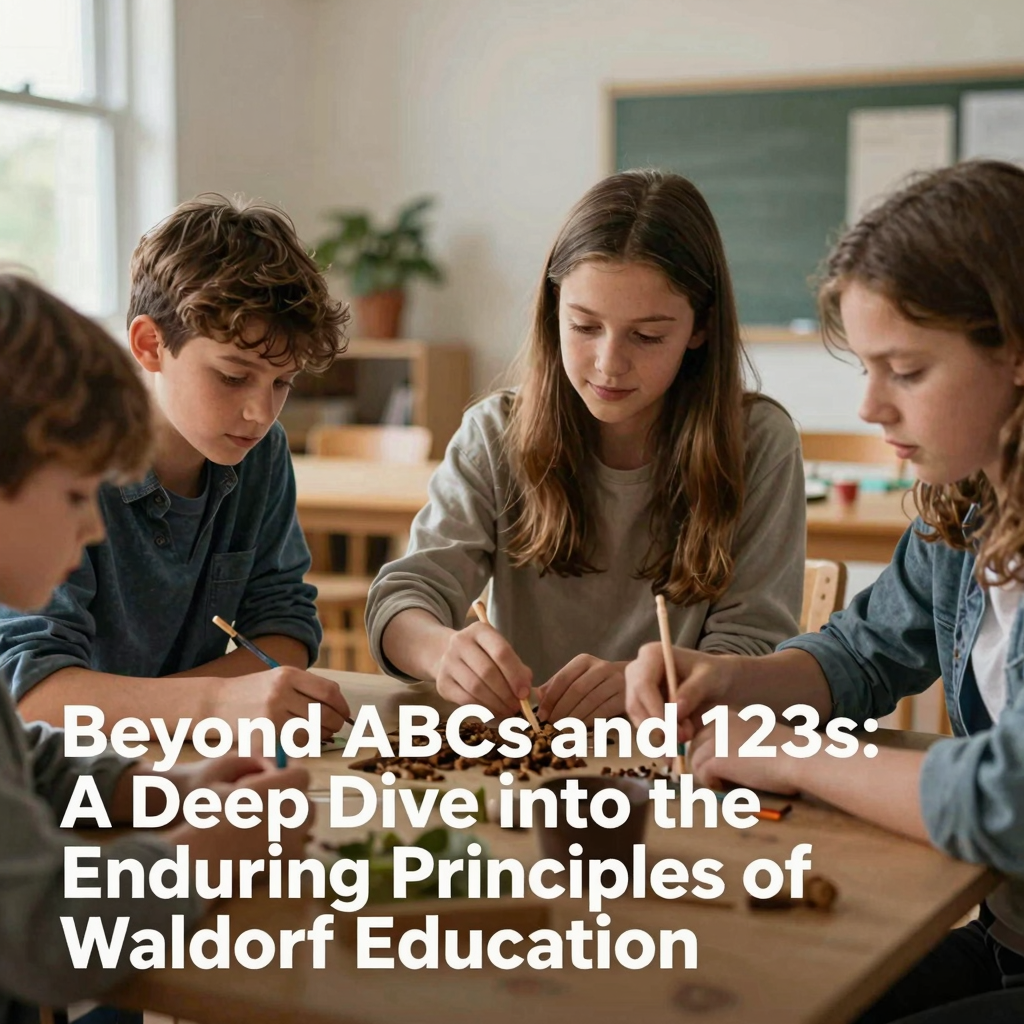
In a world increasingly obsessed with standardized testing, early academic pressure, and screen-based learning, a century-old educational philosophy offers a strikingly different vision. Waldorf education, founded by Austrian philosopher Rudolf Steiner in 1919, is not merely a teaching method but a holistic understanding of human development. It’s an approach that seeks to educate the whole child—head, heart, and hands—fostering not just intellectual acuity but also emotional resilience, creative thinking, and a deep sense of purpose. With over 1,200 schools and 2,000 early childhood programs worldwide, its principles continue to resonate with parents seeking an education that values imagination, rhythm, and meaningful connection. Let’s explore the foundational pillars that make this educational path so unique and enduring.
The Philosophical Heart: Understanding the Whole Child
Before examining its practices, one must understand the anthropological view underpinning Waldorf education. Rudolf Steiner’s philosophy posits that human development unfolds in distinct, seven-year phases, each with specific learning needs and capacities. The Waldorf teacher’s role is to meet the child precisely where they are in this developmental journey.
The Threefold Human Being & Developmental Stages
Steiner described the human being as having three interconnected faculties: thinking (head), feeling (heart), and willing (hands). True education, he believed, must engage all three. This translates into clear developmental epochs:
- Early Childhood (0-7 years): The Willing Years. The young child is a being of imitation and physical activity. Learning is experiential, rooted in play, domestic activity, and rhythmic repetition. The focus is on protecting the sense of wonder and developing a healthy physical body. Formal academics are intentionally delayed.
- Middle Childhood (7-14 years): The Feeling Years. As the child’s emotional life blossoms, the educational approach becomes artistic and imaginative. The teacher-authority figure presents the curriculum through narrative, art, and music, engaging the child’s feelings to make learning vivid and memorable. Abstract concepts are introduced through concrete, sensory experiences.
- Adolescence (14-21 years): The Thinking Years. With the awakening of critical, analytical thought, the curriculum challenges students to seek truth, understand causality, and form independent judgments. They are guided to connect with the world intellectually and ethically, preparing for their unique path in life.
Core Principles in Practice: The Waldorf Classroom Experience
These philosophical foundations come to life through specific, recognizable practices that distinguish a Waldorf environment from a conventional classroom.
Rhythm, Routine, and Reverence
Rhythm is the invisible architecture of Waldorf education. From the predictable daily routine to the seasonal festivals celebrated throughout the year, rhythm provides security and a sense of belonging in the natural and social world. This is not monotonous repetition but a living, breathing cadence that includes times for expansive play and times for focused work, times for social exuberance and times for quiet contemplation. Reverence—for nature, for each other, and for the process of learning—is cultivated through simple acts like lighting a morning candle, singing a grace song, or hearing a story told, not read, by the teacher.
The Central Role of the Class Teacher
One of Waldorf’s most distinctive features is the “class teacher” principle. Ideally, a teacher stays with the same group of children from first grade through eighth grade. This deep, long-term relationship allows the teacher to understand each child profoundly, to become a trusted guide through the developmental stages, and to weave the curriculum into a cohesive tapestry. The teacher grows and learns alongside the class, embodying the value of lifelong learning.
An Artistic, Integrated Curriculum
Art is not a separate subject in Waldorf schools; it is the medium through which all subjects are taught. Academic lessons are introduced through storytelling, painting, drawing, music, and movement. When learning about ancient Egypt, students might model pyramids from clay, write hieroglyphs with hand-carved stamps, paint Nile landscapes in vibrant watercolors, and perform a play about pharaohs. This integration ensures that knowledge is absorbed not just cognitively, but sensorially and emotionally, leading to deeper, more personal understanding.
Unplugged and Nature-Connected
In alignment with its focus on healthy childhood development, Waldorf education strongly emphasizes real-world experiences over virtual ones. You will find a notable absence of computers, tablets, and screens in the lower and middle school grades. Instead, learning is anchored in the tangible: handcrafts like knitting and woodwork, gardening, outdoor play in all weather, and frequent nature immersion. This principle is based on the belief that direct sensory interaction with the physical world is crucial for developing attention, imagination, social skills, and a grounded sense of self.
The Modern Relevance: Addressing Criticisms and Celebrating Outcomes
Waldorf education is not without its critics. Some question the delay in reading instruction, the spiritual (though non-denominational) underpinnings, or the lack of early technology use. Yet, in an age of childhood anxiety, attention fragmentation, and environmental disconnect, Waldorf principles are being re-examined for their profound relevance.
Research and graduate studies often point to consistent outcomes: Waldorf students frequently exhibit high levels of creativity, resilience, social competence, and ethical thinking. They learn to approach problems from multiple angles, persevere through complex tasks like a multi-year play production, and develop a confident sense of their own capacities. Crucially, by protecting childhood and allowing academic skills to unfold when the child is developmentally ready, Waldorf aims to produce lifelong learners who retain their natural curiosity and love of knowledge.
Furthermore, the emphasis on executive function skills through rhythmic practice, on emotional intelligence through artistic collaboration, and on environmental stewardship through direct nature contact directly addresses many 21st-century concerns. The “slow education” movement and the growing awareness of the benefits of play and outdoor time all echo principles Waldorf has championed for over a century.
A Path for the Whole Human
Waldorf education is not a one-size-fits-all solution, nor is it designed to be. It is a coherent, purposeful path for families who resonate with its core belief: that education should nurture all facets of a growing human being. It asks us to reconsider our metrics for success, valuing the development of a balanced, compassionate, and engaged individual as highly as academic prowess.
In its classrooms filled with natural light, handmade toys, and student-crafted artwork, it offers a sanctuary for childhood. It reminds us that before children are students, they are human beings on a miraculous journey of discovery. By honoring the developmental stages, educating through art and beauty, and forging deep human connections, Waldorf education principles provide a compelling blueprint for growing not just smarter children, but wiser, more whole human beings, equipped to meet the future with both competence and heart.