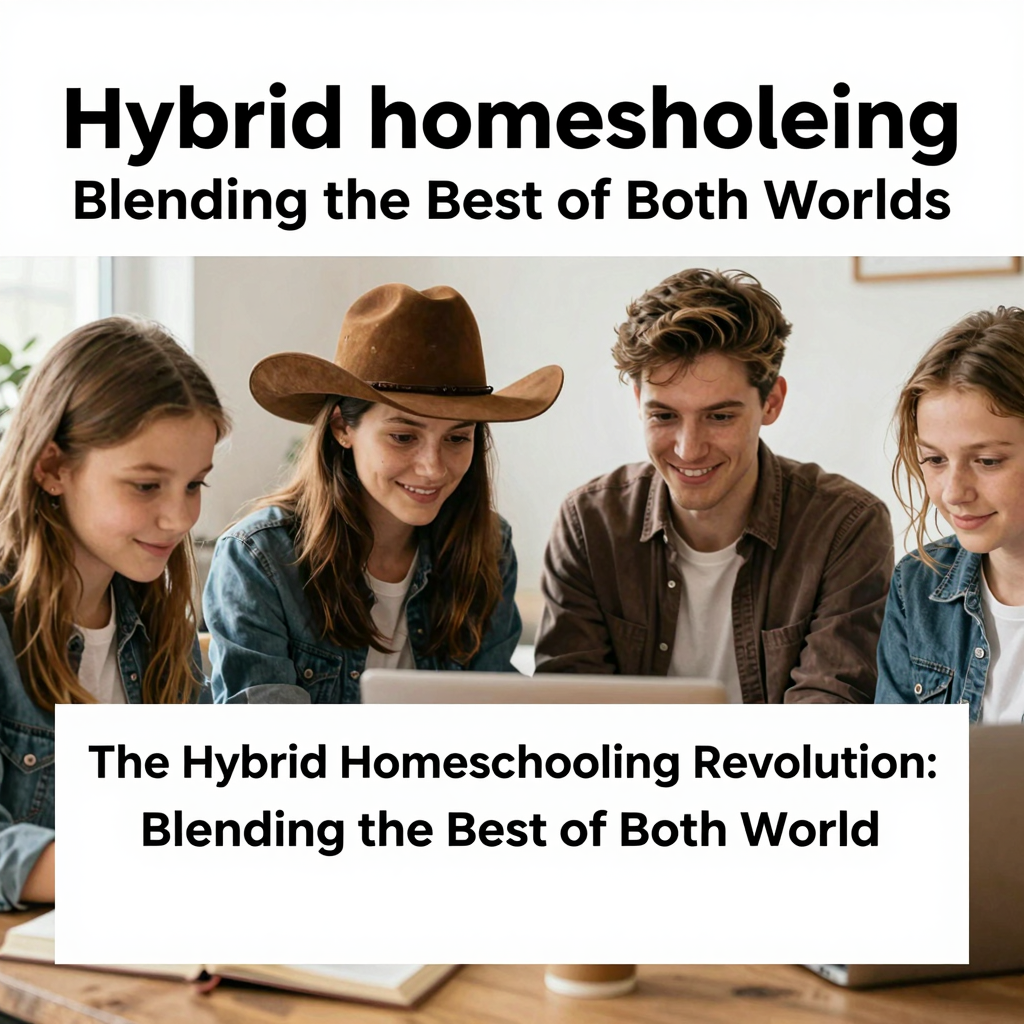
For decades, the education landscape was largely divided into two distinct camps: traditional brick-and-mortar schools and full-time homeschooling. Each offered distinct advantages and posed unique challenges. However, as families increasingly seek personalized and flexible learning solutions, a powerful middle ground has emerged: hybrid homeschooling. This innovative model is rapidly gaining traction, offering a compelling blend of structure, community, and individualized instruction that resonates with many modern parents and students. It represents not just an alternative, but often a highly tailored approach designed to meet specific educational, social, and lifestyle needs.
Hybrid homeschooling goes by several names – part-time enrollment, flexischooling, or blended learning – but the core principle remains consistent. It involves students spending a portion of their week (typically 1-3 days) attending a traditional school, charter school, or learning center, while spending the remaining days being educated at home under parental guidance or with the support of tutors or online programs. This intentional blending allows families to curate an educational experience that leverages the resources and socialization opportunities of an institution while preserving the flexibility, customization, and values-based learning inherent in homeschooling.
This model isn’t merely a compromise; it’s a strategic integration designed to maximize benefits. Imagine a student thriving in a school’s science lab or thriving in the school band, but needing a slower pace or specialized approach for core academics like math or reading at home. Conversely, a gifted learner might find their intellectual curiosity better nurtured through advanced studies at home while still enjoying recess and collaborative projects with peers at school. The permutations are nearly endless, making hybrid homeschooling an incredibly adaptable solution for diverse learning styles, family situations, and educational goals.
What Exactly is Hybrid Homeschooling?
At its heart, hybrid homeschooling is defined by its intentional split between institutional and home-based learning environments. Unlike traditional homeschooling where the parent is the primary educator for all subjects, or traditional schooling where the institution handles the entire load, the hybrid model involves a formal partnership. The specifics of this partnership can vary widely:
- Part-Time Enrollment: The student is officially enrolled in a public or private school but attends only for specific subjects, days, or programs (e.g., arts, sports, specific academic classes). The school typically handles records and assessments for the attended portion, while parents manage the home portion.
- Learning Centers/Co-ops: Students attend specialized centers or cooperative groups (co-ops) for group instruction, labs, or enrichment activities on certain days, learning at home on others. These centers often provide curriculum guidance but leave the core teaching to parents.
- Online School Partnerships: Students might be enrolled in a public or private online school program that requires some in-person components, which could be fulfilled through occasional campus visits, testing centers, or co-op meetups.
It’s crucial to distinguish hybrid homeschooling from related concepts:
- Homeschooling with Extracurriculars: A full-time homeschooler participating in after-school sports or clubs isn’t in a hybrid model. The hybrid approach involves academic instruction occurring in both settings as part of the core plan.
- Traditional School with Homework: Bringing schoolwork home isn’t hybrid homeschooling. The home portion in a hybrid model involves distinct, parent-led (or directed) instruction, not just completing assignments given by school teachers.
Why Choose Hybrid Homeschooling? The Multifaceted Benefits
The rise of hybrid homeschooling isn’t accidental; it addresses several key desires and challenges faced by modern families.
1. Unparalleled Flexibility and Customization
This is often the primary driver. Hybrid homeschooling allows families to design a schedule that fits their unique rhythm. Parents who work part-time, have irregular hours, or want to incorporate significant travel find this model liberating. Academically, it enables deep personalization. A student struggling in math can receive intensive, tailored instruction at home, while thriving in a group setting for history discussions at school. Conversely, a student excelling in science can pursue advanced projects at home while still participating in the school’s drama club. It allows for acceleration in some areas and remediation in others without the constraints of a one-size-fits-all classroom.
2. Access to Resources and Socialization
One common concern about full-time homeschooling is access to specialized facilities (labs, gyms, art studios) and consistent peer interaction. Hybrid homeschooling directly addresses this. The school days provide access to these resources and offer structured opportunities for socialization, collaboration, and participation in group activities like sports teams, bands, or school plays. This can alleviate the pressure parents sometimes feel to replicate these experiences entirely on their own.
3. Shared Responsibility and Support
For parents, hybrid homeschooling can offer a welcome balance. It shares the educational load, providing professional input and structure from the institution while still allowing significant parental involvement in guiding their child’s learning journey. This can reduce burnout and provide access to expertise (like specialized teachers or counselors) that might not be available at home. It also offers a built-in community for both students and parents through the school connection.
4. Smoothing Transitions
Hybrid homeschooling can be an excellent bridge. For families transitioning a child *into* full-time school (perhaps after early years of homeschooling), starting with part-time attendance eases the adjustment. Conversely, for families considering pulling a child *out* of traditional school due to specific issues (bullying, learning differences, lack of challenge), a hybrid approach allows them to test the waters of homeschooling while maintaining some school connection. It provides a gentler path than a sudden, full switch.
Navigating the Challenges: Considerations for Hybrid Families
While appealing, hybrid homeschooling isn’t without its complexities. Success requires careful planning and proactive management.
1. Coordination and Communication
This is paramount. Ensuring alignment between the home curriculum and the school curriculum is critical to avoid gaps or redundancies. Parents and school teachers/administrators need clear, open lines of communication. Who is responsible for teaching specific standards? How are assessments handled? What happens if the home schedule conflicts with a crucial school event? Regular check-ins and a shared understanding of roles are essential.
2. Logistical Juggling
Managing two distinct educational environments requires organization. Families need systems for tracking assignments from both settings, transporting materials back and forth, and maintaining consistent schedules. This can be particularly challenging if the school days vary week-to-week or if the family has multiple children in different arrangements.
3. Finding the Right Fit
Not all schools are open to or equipped for part-time enrollment. Families may need to seek out specific charter schools, private schools with flexible policies, or dedicated hybrid programs. Availability varies significantly by location and district regulations. Thorough research into state laws and local school policies is a necessary first step.
4. Potential for Parental Burnout
While sharing the load, parents in a hybrid model are still responsible for a significant portion of direct instruction and management. Juggling the teaching responsibilities at home with coordinating the school portion and potentially other commitments can be demanding. Establishing realistic expectations, seeking support (from partners, tutors, or co-ops), and prioritizing self-care are vital.
5. Social Integration
While hybrid students get socialization at school, being part-time can sometimes make it harder to feel fully integrated into the school community. They might miss out on inside jokes, ongoing group projects, or the deep bonds formed through daily, full-time interaction. Parents and schools need to be mindful of this and create opportunities for connection.
Making Hybrid Homeschooling Work: Practical Strategies
Success in hybrid homeschooling hinges on intentionality and effective systems. Here are key strategies:
1. Research and Legal Compliance
Know the Laws: Homeschooling regulations, including those pertaining to part-time enrollment, vary drastically by state, province, or country. Some states make hybrid arrangements relatively straightforward; others have more restrictive or complex requirements. Contact your state’s Department of Education or a local homeschooling organization for accurate information.
Find a Partner School: Identify schools (public, charter, private) that explicitly allow part-time enrollment or have established hybrid programs. Be prepared to discuss your plan in detail with administrators. Charter schools often have more flexibility in this regard.
2. Clear Agreements and Communication
Define Roles Explicitly: Before starting, have a written agreement (even if informal) with the school. Clarify:
- Which subjects/days the student attends school?
- Who is responsible for teaching each subject area?
- How will progress be assessed and reported?
- How will communication occur (email, meetings, online portals)?
- What are the expectations for homework and participation?
Maintain Open Dialogue: Establish regular communication channels with the school teachers and staff. Provide updates on home learning, and be receptive to feedback from the school. Attend parent-teacher conferences and school events whenever possible.
3. Curriculum Alignment and Planning
Map the Standards: Ensure the home curriculum covers the necessary academic standards required by the state or the partner school, particularly for the subjects taught primarily at home. Avoid significant gaps.
Plan Synergistically: Look for ways to connect learning across both environments. If the school is studying ancient Egypt in history, the home learning could incorporate related literature or art projects. This creates a more cohesive educational experience.
Choose Resources Wisely: Select home curriculum materials that suit your teaching style and your child’s learning needs. Online programs, textbooks, unit studies, or project-based learning can all be effective components.
4. Organization is Key
Master the Schedule: Create a clear, visible weekly schedule that delineates school days, home learning days, and specific times for subjects or activities. Use planners or digital calendars consistently.
Centralize Materials: Have designated spaces and systems for school materials (backpacks, permission slips, school books) and home learning materials. A “go-bag” for school days can prevent last-minute scrambles.
Track Progress: Maintain clear records of work completed at home, including samples of work, reading logs, and notes on progress. This is important for your own assessment and may be required for reporting to the school or state.
5. Building Community and Support
Connect with Other Hybrid Families: Seek out local or online communities of families using this model. They can offer invaluable advice, share resources, and provide understanding support.
Utilize Support Networks: Don’t hesitate to involve tutors for challenging subjects, join subject-specific co-ops for enrichment, or trade teaching responsibilities with another hybrid family for specific topics.
Prioritize Family Well-being: Recognize that hybrid homeschooling requires energy. Schedule breaks, ensure time for family connection outside of academics, and don’t be afraid to adjust the plan if it becomes unsustainable.
Conclusion: A Dynamic Path Forward
Hybrid homeschooling represents a significant evolution in educational choice, moving beyond binary options to offer a nuanced, flexible pathway. It acknowledges that learning doesn’t have to be confined to a single setting or methodology. By strategically blending the resources and community of traditional schooling with the personalized focus and flexibility of home education, families can craft an educational experience that truly fits their child’s unique needs, talents, and aspirations.
While it demands careful planning, coordination, and commitment, the potential rewards are substantial: tailored learning, access to diverse opportunities, shared responsibility, and a schedule that adapts to family life. As educational needs continue to diversify and families seek greater agency, hybrid homeschooling stands out as a powerful, adaptable model, truly offering the best of both worlds for many. It’s a testament to the evolving understanding that education, at its best, is not a rigid system, but a dynamic journey that can be thoughtfully designed.